TL;DR: Go to https://exiftool.org to get the goods!
Did you know that a picture is worth a thousand words? Thanks to inflation, that’s closer to 33,000 words today. But good luck finding a buyer in this economy.
Photography, a French hobby from the early 19th century - you may have heard of it, has gone from a science afforded only by the elite to being so ubiquitous there are likely pictures of you picking your nose openly available on any of thousands of police surveillance systems installed across the world. What used to require special papers and chemicals and glass now requires a half second of attention from the danger rectangle nearly everyone carries. I don’t mean the ART of photography. That’s art. That’s the eye and composition of human wonder. The process of photography, though, is about as mundane as shoes or pizza parties in lieu of compensation or work-life balance.
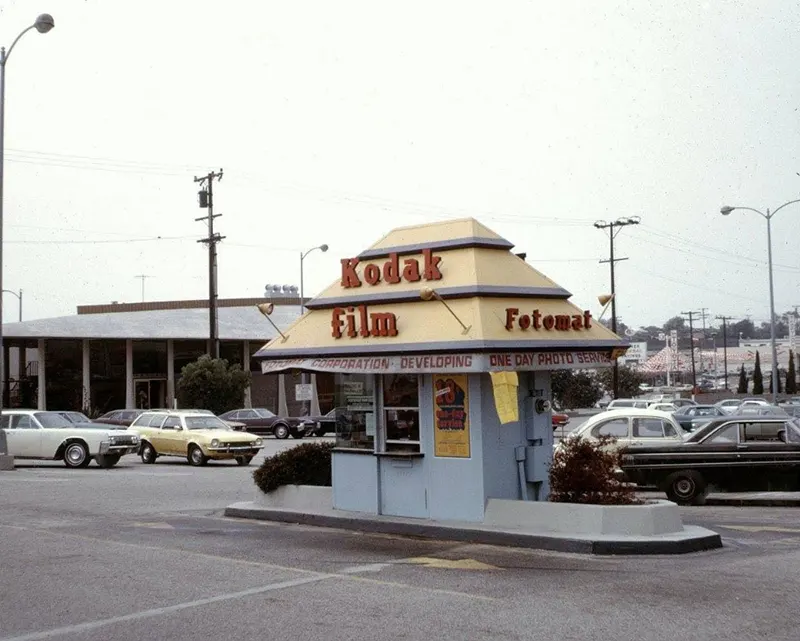
In this procession to mundanity, a word worth at least 1/8th of a picture, the processes behind its majicks have been lost on the photographer. In the time of shared butthole rags in outhouses and oil being an annoyance to water diviners, photographers had to be chemists. They had to deposit opaque materials in solution on glass or treated paper. They had to know for how long each stage of development took based on the subject of the photograph. They had to set and enlarge and repeat from negatives. It was a meditative process as much as a scientific one. Today, we can simply double-press a button (poor people’s phones still have buttons. Apple folks probably just speak some incantation and do a little somatic gesture) to bring up an instant FotoMat booth in the palms of our hands.
That’s not to say the lay person knew the photographic process before digital cameras made it a New York rooftop party talking point. The commodification of photography moved processing to a central, abstracted location a century prior. So not thinking about anything but the shot itself has been, for the lifetime of anyone reading this, the norm. And that’s not a bad thing. Not every snap, candid, or interesting dog poo needs to be meticulously developed. Most are simply mementos or memory aids or embarrassment fodder to show to first dates. So when digital photography became something anyone could carry in their pocket, learning the inner workings was never on the list of things people wanted to do with it. Mostly they wanted to take photos of the food they were eating or their genitals. Sometimes both at the same time. What a beautiful world.

Digital imaging brings with it a host of advantages. Ease, access, instant…ness. And a digital file can carry more than just the image. But unlike a hastily snapped Polaroid of your grundle, the data isn’t limited to an unreadable date scrawled in sharpie or a quick description of the scene on the back of a print. The file’s data is normally completely invisible. Because it’s invisible, it’s also often out of mind. The average phone photog isn’t thinking of their precise location being associated with a picture as more than anything but a future convenience. If at all. They aren’t thinking about what data the app they are using adds to the photo - likely from a place of functionality on the part of the developers who made it. Metadata - the information stored in the file along side the stream of bits that make up the image - is extremely useful for quickly categorizing, grouping, searching, and filtering images. The type of data stored varies from camera to camera, from app to app. It can be edited and updated by your photo processing software. Every time the file is piped through something, it generally adds a little more. That seems great, right?
And usually it is pretty great. Especially during the creative process of editing or for organization of your collection. But what happens when you share that photo online? If you’re like me, nothing. It just sort of sits there and nobody likes it and you eat a Cadbury about it. But a couple decades ago, someone who gets paid to create giant buckets for categorizing people for targeted advertising realized that this was another metric they could use to do just that. And in service, applications and cameras began adding more data to that invisible catalog. Advertiser profiles can include information about where you’ve been based on your photo stream without ever having to ask you to enable GPS for their app. Analytical algorithms have made that a much bigger issue as they can start making connections between things at a rate humans can’t even comprehend. They can identify that a specific subject of photography lives at a precise location based on multiple photos with the same coordinates. They can use your editing software to determine if you’re open to subscriptions or if you’re a professional versus an amateur. Large language models can use the information to steal your style by creating a fingerprint that quickly munges all of your work into a bucket to be drawn from should some sad moron decide to fake you in particular. In a world of big data solutions, the free fuel your images provide to corporate data pools can and will be used against you. EXIF was created, like most things perverted through a scanner dimly by our current surveillance state, from a place of good intent. It was meant to do all the things it does that are useful. Like fire. Like leaded gasoline. Like asbestos. The thinking around something, particularly in computer science, generally stops when the goal of the usecase is met. The thinking of bad actors, however, does not.
“So what? They’ve already got my ad profile,” I don’t hear you say because I’m alone in a room with a keyboard right now. Yes, but we have crossed a threshold in recent years of draconian overreach by monitoring bodies. AdSense having a fingerprint of you may not matter right now. But if you say something the government doesn’t like? If you take a photo of an unrelated Waffle House plate while helping a loved one get to a state that allows healthcare? If you exercise your constitutional rights in a regime that illegally demands you do not? You’ve now outed yourself and who knows how many others. This isn’t a game of personal risk anymore. The computation behind these KKKeystone Kop tactics is enormous. And often wrong, but in ways that are never trivial. And digital forensics can create a pretty compelling case from metadata if they really want to place you and a photo taken by you together in front of a jury. When living becomes criminal, unfortunately, we must all “avoid getting caught” just existing. So it’s a good time to start using some tools that make the whole thing less of a free square for Peter Thiel’s Palantir Pals.
There are a number of options for editing or removing metadata on photos. Some editing software allows you to do it directly. But my preferred method is EXIFTool by Phil Harvey.

Not that Phil Harvey. But an equally British one. A Master of Nuclear Physics and avid birder, Mr. Harvey created EXIFTool. A fantastic, multiplatform tool that quickly removes the metadata tying your digital fingerprint to a photo. On the website for the tool, you can find a number of links to external resources concerning EXIF data as well as a full set of instructions for a number of different platforms and applications. I won’t rewrite the site here, but I do suggest clicking the previous link and giving it a read. And a download. There is zero reason to hand over identifying information to corporations who trade in you as a product. Nor to dictatorial governments, dying to kill. This is not, in any way, a means to subvert criminality. Risk is risk. But removing EXIF data DOES make directly linking you to a photo much harder. And moreover, it makes linking people who AREN’T you to YOU much harder. The relationships we don’t know we build in a digital world are uncountable. We connect with people by simply being in proximity under the covers of the global surveillance networks created under the lie of ’safety’ for the other thing. Being responsible with data is a social imperative as our individualistic facades are melted away and we are all made aware that we are fuel. Be a good neighbor and scrub your photos before sharing them.
There are a few caveats, but overall the benefit of removing EXIF data (something I’m still getting into the muscle memory of doing - there’s hypocrisy on this very blog) outweighs the minor inconveniences. Some applications use EXIF data to do rotation. That is, they will retain the image stream as unrotated and apply a rotation tag, honored by most viewing software. So removing the data may result in an image being in an incorrect orientation. For color-managed images, EXIF can contain color attributes which help them to be displayed correctly. All of this is surmountable, but with extra work on our part. A small price to pay, but something to be very aware of if you’re posting things quickly. The more you remove metadata from what you post, more dead ends you introduce to crawling algorithms trying to link every single atom of data to every single other one.